The Silent Epidemic of Fake Productivity (and Why Managers Love It)
 Publié le 8 December 2025
It’s 8:57 a.m., and your teammate’s status light turns green. They’re online—on time, as always. The chat pings, emails flow, documents shuffle, and meetings fill the calendar. On the surface, it looks like a high-functioning workplace.
But behind the flurry of activity lies something hollow: fake productivity. It’s the modern worker’s survival instinct—a performance of busyness, a defense mechanism against scrutiny. And while it quietly drains real results, many managers unknowingly (or conveniently) encourage it.
The Illusion of Output
Fake productivity thrives in workplaces where visibility matters more than outcomes. Employees quickly learn that being seen working is often valued more than actually doing meaningful work. It’s like when you’re a fresh graduate and are more preoccupied with how long your resume should be instead of making it actually fleshed out.
But this illusion of output is deceptive. It creates an ecosystem where energy is funneled into performative tasks rather than impactful work. Workers spend their best hours formatting reports no one reads or over-preparing for meetings that achieve little. In essence, they’re optimizing for appearances, not effectiveness. And who can blame them if they stood out in their interview doing so?
The real cost here is cognitive overload. When employees feel they must constantly prove they’re busy, they rarely find the mental space for creativity or problem-solving. Ironically, those who produce the most valuable results often appear less active because their work requires deep focus—something the culture of constant visibility punishes.
Why Managers Mistake Motion for Progress
Managers, too, get caught in the illusion. In many organizations, leadership metrics revolve around activity rather than achievement. If their teams appear busy, it reflects well on them. There’s a subconscious comfort in the sight of full calendars and long Slack threads—it signals control, even if nothing of value emerges.
This bias toward visible work stems from the industrial-age mindset that equated effort with output. In a factory, more movement meant more production. But in the knowledge economy, more movement often means more distraction. Yet many managers still struggle to evaluate results they can’t easily quantify. Measuring time spent feels safer than assessing ideas delivered.
There’s also ego involved. When a team seems hyperactive, it validates the manager’s importance. “Look at how much is happening under my leadership,” they think, unaware that the flurry may be more smoke than fire. The unfortunate result is a workplace optimized for optics, not outcomes.
The Fear That Fuels It All
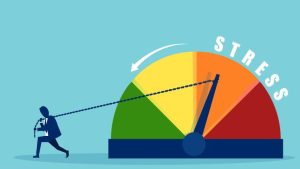
At the heart of fake productivity lies the fear of being seen as lazy, replaceable, or dispensable. When layoffs and performance reviews hinge on perception, employees learn that visibility equals safety. They flood calendars with check-ins, update managers on trivial progress, and reply instantly to every message to signal engagement.
This behavior isn’t laziness—it’s self-preservation. People act rationally within irrational systems. If employees see that those who work quietly are overlooked or punished, they’ll adapt by being loudly mediocre. Fear transforms the workplace into a stage, where performance outweighs results and applause replaces achievement.
The digital workplace amplifies this further. With remote tools tracking online time and message activity, the boundary between genuine contribution and digital performance blurs. Workers no longer just do their jobs—they must constantly prove they’re doing them.
When Metrics Make Things Worse
Many organizations unintentionally institutionalize fake productivity through poorly designed metrics. Time-tracking tools, message response rates, and meeting participation statistics create a feedback loop that rewards noise over nuance.
If you’ve found a nice document converter and made other things easy, it’s not really measured. Likewise, if an employee spends hours thinking through a complex problem but logs few measurable “actions,” they’re often seen as underperforming.
This data obsession turns creativity into a liability. It encourages workers to produce constant proof of effort—status updates, reports, or pseudo-progress—to feed the system. The irony is that the very metrics designed to measure productivity end up destroying it. Instead of fostering results, they cultivate compliance.
Managers love these systems because they provide the illusion of control. Numbers make the abstract feel concrete. Dashboards and reports become comforting, even if they’re built on meaningless leadership metrics. But the result is a self-perpetuating machine that mistakes data points for progress and busywork for excellence.
How Fake Productivity Becomes Culture
Once fake productivity becomes normalized, it’s nearly impossible to reverse without conscious intervention. New hires quickly absorb the unspoken rules: never let your status light go gray, always speak in meetings (even with nothing to add), and never take too long to think. Before long, authenticity becomes risky and even the simplest cloud automation solutions are hard to implement.
Over time, this culture breeds cynicism. The best people—those motivated by mastery and impact—quietly leave. What remains are those skilled at performance rather than performance improvement. The organization becomes a theatre of motion where innovation suffocates under the weight of appearances.
Even leaders who recognize the problem often hesitate to challenge it. After all, the system keeps everyone busy, and busyness feels safe. The deeper tragedy is that fake productivity doesn’t just waste time—it wastes potential. It teaches people to survive instead of succeed, to simulate value instead of creating it.
The Path Back to Real Work
Escaping the cycle of fake productivity requires courage—from both leaders and employees. Managers must redefine what success looks like, shifting the focus from hours logged to outcomes achieved. That means rewarding deep work, allowing silence, and trusting that meaningful results don’t always come with visible activity.
Real productivity often looks quiet. It involves reflection, experimentation, and sometimes failure. Leaders who understand this give their teams permission to disconnect from constant visibility and focus on results that actually move the business forward.
For employees, the challenge is to unlearn years of performative behavior. It means how people handle stress and pressure, saying no to meaningless meetings, and setting boundaries around deep work. The most powerful signal of professionalism isn’t instant availability—it’s consistent value.
Conclusion
Fake productivity isn’t laziness—it’s a cultural symptom of fear, metrics, and misplaced incentives. The modern workplace has confused presence for performance, and in doing so, traded progress for perception.
Yet change is possible when both managers and employees choose to prioritize outcomes over optics. The quiet worker who spends an afternoon solving one tough problem contributes far more than the one who attends five meetings about it. Real productivity doesn’t make noise—it makes an impact. And it’s time we remembered the difference.