
How to Use Social Media Trends & Lifestyle Insights to Craft an Authentic Employer Brand
 Publié le 13 January 2026
It usually starts in an ordinary moment. Someone is scrolling through their feed after a long day, moving past the usual videos and updates, letting their mind drift.
Then, your company appears. Not on a career site with a generic job listing. Not a polished advertisement. It’s a lot simpler and more effortless than that.
Maybe it’s an employee sharing a quiet win. Maybe it’s a photo from a team event. Maybe it’s a short clip that wasn’t meant to be anything special at all
Still, it says something.
And before that person even realizes it, a first impression settles in. One that forms without an application, without an interview, and without a recruiter ever reaching out.
This is the makings of an effective employer branding strategy.
Why Does Employer Branding Matter?
Employer branding used to live mostly inside a company. It showed up in onboarding documents, a few pages of internal communications, maybe a poster or two about values.
It was something people encountered after they were already employees, not before. But the way people learn about workplaces has changed.
Now, job candidates start forming impressions long before talent acquisition reaches out. They notice the little details, like how employees talk about their first day, how leaders communicate online, and what the workplace looks like in passing moments. None of it feels official, yet all of it affects how they interpret the employer value proposition without reading a word of it.
This is why almost half of U.S talent leaders split their employer branding priorities between supporting their current workforce by cultivating a culture around brand advocates and reaching people outside the company.
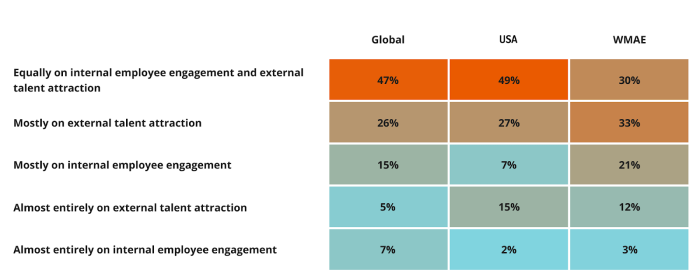
Yet, a noticeable share still pushes harder toward attracting new talent, far more than global averages.
The fact that employers are placing more weight on external attraction tells us something about the state of employer branding. It means the brand isn’t just an internal company culture document anymore. And neither is it making the same onboarding mistakes that only matter when someone is already through the door.
It has become a public-facing identity that needs to resonate with people who have never stepped inside the company.
External attraction forces employers to think about how the brand lives outside their walls, whether that’s on social media platforms, in conversations, in trends, or in the lifestyle signals job candidates pay attention to.
A strong employer brand is now about visibility, relatability, and cultural fit, long before someone applies.
It also acknowledges that job candidates evaluate the company the same way they evaluate any brand: through what they see, what they hear, and how well it matches the lives they want to build.
How to Craft an Employer Brand That Matches Modern Candidate Expectations
Creating an employer brand that resonates today means understanding how people experience a company before they interact with it.
That’s what we call the candidate experience. It starts with whatever someone sees, hears, or picks up about the workplace when they aren’t looking for a job at all.
This is why social media is one of the most influential branding channels available. For many candidates, it’s the first honest glimpse into how a brand carries itself.
Let’s look at the many ways you can use social media platforms to build a corporate brand that current and future candidates can’t get enough of.
Study the Social Media Trends Your Audience Already Follows
Every day, people scroll through an endless stream of social media content without thinking much about it. However, the patterns are there.
This includes certain jokes, certain storytelling styles, or certain moments that seem to capture how people feel about work, life, or the balance between the two.
Those patterns reveal the content formats audiences connect with. A day-in-the-life video giving a glimpse into the employee experience might resonate on one channel, while a post showing employee advocacy works better somewhere else.
A good example is when a company shares an everyday moment that reflects diversity, equity and inclusion without trying to spotlight it.
For example, it could be a brief comment about feeling welcome on the first day or a photo from an employee-led event.
This helps make a great first impression, considering that 86% of job seekers use social media in their job search.
Listen Before You Post
Before sharing anything outwardly, it helps to understand the conversations happening online. Social trends change a lot and quickly. And people express their thoughts in ways that aren’t always obvious at first glance.
It’s why 63% of companies cite social listening as a top priority.
Understanding social conversations at scale can be challenging, so many teams now use AI marketing tools to analyze lifestyle trends, sentiment shifts, and audience behavior.
These insights help shape an employer brand that feels relevant rather than reactive.
Listening also reveals how candidate opinions take shape long before anyone considers applying. A single comment, a shared post, or a subtle reaction can tell you more about what people expect from a workplace than a long survey ever could.
The same idea applies inside the company. Topics employees talk about and avoid often show up in internal communications before they appear anywhere else. When you understand these signals, internal marketing is more grounded and reflective of real employee experiences.
Paying attention to these patterns strengthens employee retention, because people are more likely to stay when they feel the company is paying attention to how they’re experiencing work.
And when employees feel supported, they tend to share small moments of their work lives naturally, becoming informal brand advocates without being asked.
Candidates notice this, and the steady presence of genuinely content employees speaks volumes.
Capture and Interpret Lifestyle Signals That Tell a Bigger Story
People don’t evaluate workplaces through big, polished messages. They notice the tiny details first.
These include the lifestyle signals that say a lot about a company because they show what the work actually feels like.
Here are some examples of signals that tend to matter most and what they often reveal:
- How people organize their day: If employees share moments of planning, quiet workplace setups, or uninterrupted time, it usually points to a workplace that respects pacing.
- How teams interact with each other: A short video of coworkers solving a problem together or checking in casually between meetings shows whether collaboration is natural or forced and whether people seem comfortable with one another.
- How people handle transitions: Lunch breaks, quick walks, or short resets between calls show that there’s space built into the day.
Use Content That Breaks Industry Myths
A highly engaging content trend is directly addressing industry myths. Authentic employer brands use real-world content to counter negative stereotypes or outdated perceptions about a job.
By tackling misconceptions head-on, they demonstrate the industry’s expertise and transparency. The key to this strategy is leveraging employees—the brand’s most trusted advocates—to tell the true story.
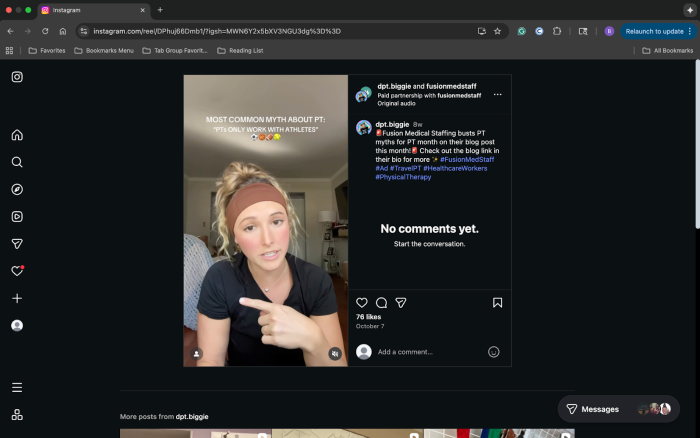
A perfect example is Fusion Med Staff’s shared post with travel PT, Kait, who addressed the most common myth about physical therapists: “Physical therapists only work with athletes.” This type of content is invaluable for recruiting talent for various roles. It takes a job that might be perceived as repetitive and showcases its full potential.
Build Credibility on TikTok
When companies start using TikTok to attract job candidates, they quickly realize building a following takes time. Some businesses decide to speed things up and have gained TikTok followers by buying them to get started faster.
They figure having a decent number of followers right away makes their account look more real and helps them show up in people’s feeds. It’s basically a shortcut to looking established instead of starting from zero.
Different companies handle this differently depending on what they’re trying to do and how fast they need results.
But no matter how a company gets its first followers, the real work is still the same: posting content that actually shows what it’s like to work there and getting people interested enough to apply for jobs.
The follower count might get people to click, but the content is what makes them stay and care about the company.
Here are some popular TikTok trends that can help you achieve that:
- Day-in-the-life clips that follow an employee through ordinary moments
- Team micro-interviews where coworkers answer one question on camera
- Behind-the-scenes snippets that show parts of the job people rarely see, whether it’s a workspace setup, a process in motion, or a daily routine employees rely on
- Before-and-after project videos that highlight progress, effort, and collaboration
- Soft-skill moments, such as a quick interaction, a shared laugh, or a moment of support that reveal more about company culture than a formal message
- “Expectation vs. reality” reels that break myths about a role or industry, helping candidates see the work through a clearer lens
- First-week reflections where new hires share the things that surprised them, made them feel welcome, or that they wish they’d known sooner
- Employee stories that show their commitment to the company, demonstrating brand advocacy
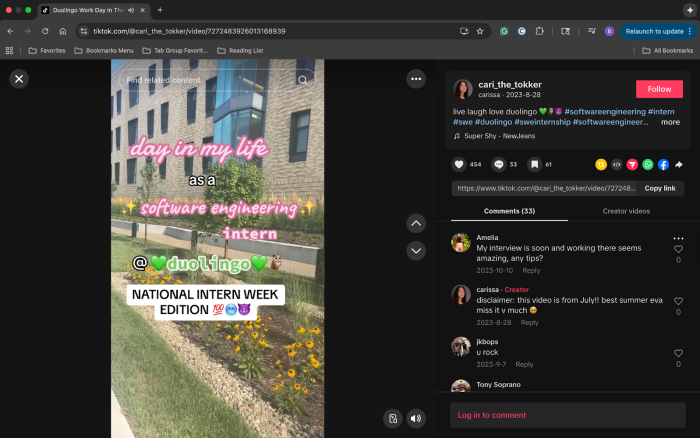
Let’s look at a real-life example. Duolingo’s recruiting team regularly posts day-in-the-life clips featuring employees in different roles.
The videos don’t try to sell anything. They simply follow someone through an ordinary workday, grabbing coffee, joining a standup meeting, reviewing a project, or chatting with a coworker in the hallway.
Conclusion
Employer branding was never meant to be a performance. It was meant to be a clear view into the everyday reality of a workplace.
But somewhere along the way, many companies tried to script it by polishing it, perfecting it, and reshaping it into something unrecognizable.
The problem is that people can sense when a story isn’t grounded in real experience.
So, what resonates? An authentic employer brand that shows candidates how people work, connect, and navigate their day.
Ready to reach those candidates and share the kind of workplace they can connect with? Post a job on Jobillico and start connecting with people who truly belong.