Future-Proof Your Career in an Uncertain Economy: 5 Essential Shifts in Mindset, Skillset, and Personal Health
 Publié le 18 March 2026
To say that the past five years posed one challenge after another would be a huge understatement. No matter where you are and regardless of what you do, it’s absolutely impossible for you not to have experienced some level of uncertainty. Even if, personally, you don’t feel affected by global events, research clearly indicates that most people and brands do.
According to consumer sentiment research, people’s economic confidence has finally increased over the past twelve months. However, that’s likely to change, with energy-driven inflation risks and surges in oil prices prompting investors to brace for a shock.
Naturally, your career may not depend on any of these factors. Nevertheless, with the economy going toward uncertainty once again, it’s not a bad idea to explore opportunities to future-proof your job security.
So, what are the shifts in mindset, skillset, and personal health you need to make to ensure professional, financial, and personal well-being in the coming months? This article looks at some of the top life areas you need to pay attention to if you want career security going forward.
Understand Potential Economic and Career Challenges
The first step toward being prepared for anything your professional life throws at you is keeping up with current events. Yes, it can be stressful and overwhelming — especially if you’re prone to doomscrolling. Nevertheless, it’s essential if you want to future-proof your career in an uncertain economy.
But here’s the deal. Survey data shows that 40% of people have started tuning out the news to avoid doomscrolling-related anxiety. However, while the outcome of such a decision may feel good, it’s not a real solution — instead, it’s just a (potentially harmful) coping mechanism.
So, how do you keep up with economic and industry-related news in a way that prepares you for potential challenges but doesn’t harm your emotional health?
- Shift your mindset about news consumption. No, you don’t have to scroll all day long to be in the know. Instead, setting aside some time during the day (or even just a few minutes per week) can be sufficient to stay up-to-date on everything going on.
- Choose your sources wisely. With the prevalence of social media-as-news and the rise of short-form content, it’s exceptionally easy to fall into overwhelming patterns of content overconsumption. But you don’t need minute-by-minute updates on everything going on. Instead, choosing a few (ideally versatile) information sources and following trustworthy industry analysts on platforms like LinkedIn can be more than sufficient to keep you in the loop.
- Don’t just think of the news as something going on somewhere out there. Instead, do your best to comprehend how global events could impact your industry, which is crucial if you want to prepare yourself for potential economic and career challenges coming your way.
Ultimately, keeping up with world events and industry trends may feel unnecessary, overwhelming, or downright time-consuming. However, if you’re a career-oriented person focused on growth, doing so is essential for your success potential.
So, the question isn’t whether you need to be up to date. The goal is to remain in the know without allowing it to negatively impact your health.
Prioritize Diversification: Income and Skills
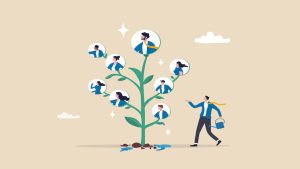
The second essential strategy for future-proofing your career in an uncertain economy is prioritizing diversification. Primarily in terms of your marketable skills.
Yes, the saying does state that a “Jack of all trades is a master of none.” However, there’s a little-known continuation that goes “but oftentimes better than a master of one.” This is particularly true in 2026 and beyond, where economic uncertainties, innovative technologies, and raging market trends demand that professionals (especially entrepreneurs) continue evolving with the times.
Just think of it this way. Ten years ago, social media was just a place people went to post pictures of their travels, meals, or hobbies. Today, however, it’s one of the most prominent brand and product discovery channels, with reports stating that as many as 38% of Gen Zers begin their buyer’s journeys on social media.
So, over the course of a few years, brands (and marketing professionals) have had to develop a whole new set of skills related to social selling. The same goes for AI prompting, web design, data analysis, or any other area of business.
With this in mind, one of the most essential mindset (and skillset) shifts you need to make to secure the longevity of your career is to prioritize your professional education in a way that’s diverse and future-oriented.
No, you don’t have to become an expert at everything. Nevertheless, becoming acquainted with relevant techniques and strategies — such as growing a Facebook presence, for example — is inevitably going to come in handy across your career path (whether directly or indirectly).
Additionally, don’t forget that diversification for career success amidst economic uncertainty isn’t just about making yourself more hireable. It’s equally important that you diversify your income so that you have a level of financial safety that allows you to prioritize professional growth and job satisfaction.
In addition to exploring side-hustle opportunities to make more money on the side, ask yourself whether there are any ways you could make your money work for you.
Investing, selling digital assets, cost segregation, and asset acquisition can provide a solid level of financial freedom. And while the primary benefit may be more money in your pocket, look at these activities from a slightly different viewpoint. They’re a safety net.
If your primary industry changes overnight, global events create disruptions, you face personal challenges, or just realize you want some time off to focus on your next project, having a healthy passive cash flow and 6-12 months worth of living expenses saved can allow you to make better choices without experiencing financial stress or having to take on risks you’re uncomfortable with.
Invest in Self-Care
When discussing career optimization — particularly in an uncertain economy — most advice focuses on acquiring high-value skills and optimizing your finances. But the simple truth is that personal health (both physical and emotional) matters just as much in terms of allowing you to handle and power through any unexpected challenges.
Think of things this way. One of the most common responses people (unwillingly) have to high-stress situations is becoming ill. Whether that involves physical or emotional symptoms such as anxiety, digestive problems, heart disease, or cognitive issues depends on a variety of factors. Furthermore, it’s important to remember that some ailments can be a direct consequence of job-related factors, such as migraines caused by sensory overload or muscle overuse injuries.
Nevertheless, one thing’s for certain. Even a little prevention can go a long way in enabling you to handle tough situations.
With this in mind, one of the most essential mindset shifts for thriving during trying periods is not to wait for illness to stop you from pursuing your dream career. Instead, invest in self-care so that you’re in top physical shape no matter the demands of your job.
In general, there are a few key areas to focus on. Sleep and exercise are, obviously, crucial for a healthy and highly functioning brain. So is nutrition. Furthermore, challenging yourself mentally is extremely beneficial for improving and maintaining cognitive capacity, proving that continual skill development is a key element of any personal and professional growth journey.
Don’t Make Plans; Build Systems Instead
One of the biggest obstacles professionals place before themselves when facing uncertainty is believing that they have to develop the perfect plan to overcome potential challenges. But there’s no such thing as a perfect plan when it comes to global economic outcomes. After all, they hugely depend on politics and other unpredictable events. Instead, there’s only smart strategization and risk management.
So, when future-proofing your career path, do your best to avoid tying yourself down by the idea of what you should be doing. Instead, aim to build systems that allow you to make the most progress while still leaving room for you to pivot when necessary.
So, what does this mindset shift look like in practice?
Well, start by defining your career goals and any potential obstacles (that you can think of). Then, explore ways to create so-called shortcuts that will allow you to reach those goals even when you’re not operating at 100% capacity.
For example, by learning how to use time-saving tools, automating processes that are unnecessarily mentally taxing (like tracking your belongings on travel days), and outsourcing tasks you know someone else can do better than you, you can create a system that allows you to thrive professionally, without tying up all of your mental and physical resources.
Ultimately, this type of balance in terms of cognitive load can be extremely helpful — especially if you also have to deal with external stress factors you have no control over. Sure, making tasks (both current and future) easy for yourself may seem like a cheat. But, when push comes to shove, it’s what’ll make the difference between swimming to the surface or caving under pressure.
Develop and Maintain a Strong Professional Network
Last but not least, if you want to future-proof your career in an uncertain economy, remember that there are very few things as capable of helping you overcome challenges as a strong professional network.
Admittedly, putting yourself out there may seem difficult (or even cringeworthy in specific digital settings). But it can be exceptionally effective at allowing you to uncover new opportunities, get help when you need it, or simply stay up-to-date with relevant industry news that you can use as a guide to optimizing your career path.
So, overcome your shyness and shift your mindset. Networking isn’t blatant self-promotion. It’s a necessary element of any successful career, which both provides valuable opportunities and a safety net in precarious times.
Final Thoughts
Future-proofing your career in an uncertain economy may seem like a Sisyphean task — no matter how hard you try to set yourself up for success, something will always come up. But it doesn’t have to be that way.
In fact, just a little bit of preparation on a professional and personal level can help you thrive even in the face of various challenges. Furthermore, if you can stop looking at economic volatility as a problem and start perceiving it as a set of opportunities in disguise, you’re bound to have a much more enjoyable career path.So, don’t hesitate to reframe your challenges as advantages. At the end of the day, this approach may turn out to be the thing that allows you to reach your goals and everything else you may not even have dared dream of.